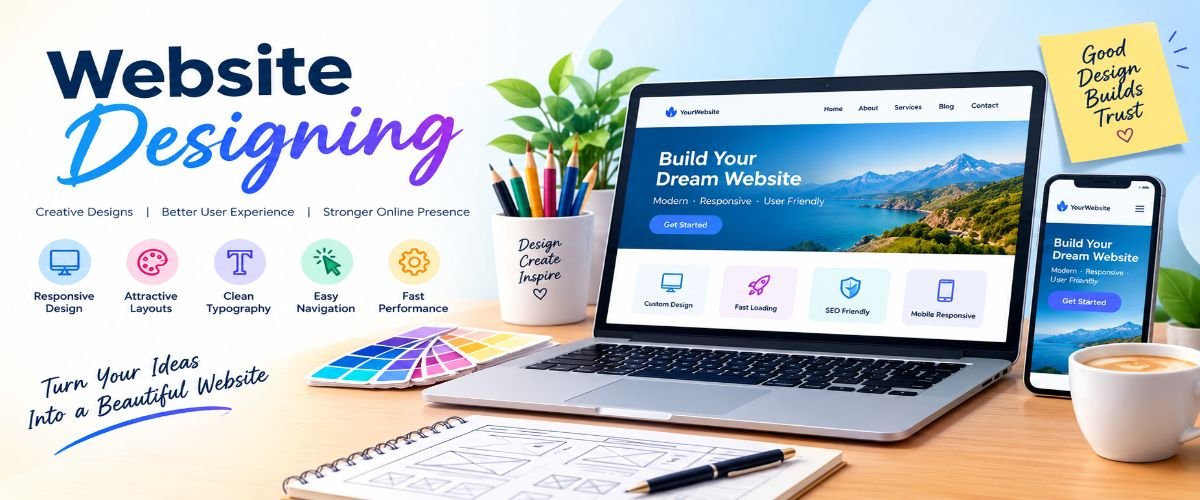
Website design is the process of planning and creating the appearance, layout, and overall experience of a website. It includes selecting colours, fonts, images, menus, buttons, and other visual elements to make a website attractive, professional, and easy to use. Website design helps visitors understand the purpose of a website and find the information they need quickly.
A well-designed website should be simple, organised, and user-friendly. When visitors open a website, they should be able to navigate between different pages without confusion. For example, a blog website may include pages such as Home, About Us, Blog, Contact Us, and Privacy Policy. These pages help visitors explore the website and learn more about its content.
Website design also includes choosing a suitable layout for different devices. A responsive website automatically adjusts its appearance to fit desktops, laptops, tablets, and mobile phones. This is important because many people access websites using smartphones.
There are several important elements of website design. Layout determines how information is arranged on a page. Colour creates a visual identity and attracts attention. Typography refers to the style and size of text, making content easy to read. Images and graphics make the website more interesting, while navigation helps visitors move from one page to another. Website speed, accessibility, and readability are also important for a positive user experience.
Website design is useful for individuals, businesses, bloggers, educational institutions, and online stores. A professional website can help build trust, share knowledge, promote products, and connect with a wider audience.
Today, people can create websites using platforms such as WordPress, Wix, and other website-building tools without needing advanced coding skills. However, learning basic HTML, CSS, and user experience principles can help people create more customised designs.
Conclusion
In conclusion, website design is an essential part of building a successful online presence. An attractive, responsive, and easy-to-use website can improve the visitor experience, communicate information effectively, and help achieve personal or business goals.
Brief Website Design Process
The website design process involves several steps:
Planning: Define the website’s purpose, target audience, and goals.
Research: Study similar websites and identify useful features and design ideas.
Creating a layout: Prepare a basic structure or wireframe showing where content, images, and menus will appear.
Visual design: Choose colours, fonts, images, and other elements that match the website’s theme.
Development: Build the website using tools such as WordPress, Wix, HTML, and CSS.
Testing: Check links, navigation, loading speed, mobile compatibility, and overall usability.
Launching and maintenance: Publish the website, update its content, fix problems, and keep it secure.
